Magnesium and the Science of Deep, Restorative Sleep
Three forms of magnesium, three different roles in your nightly recovery cycle.
May 2026 · 4 min read
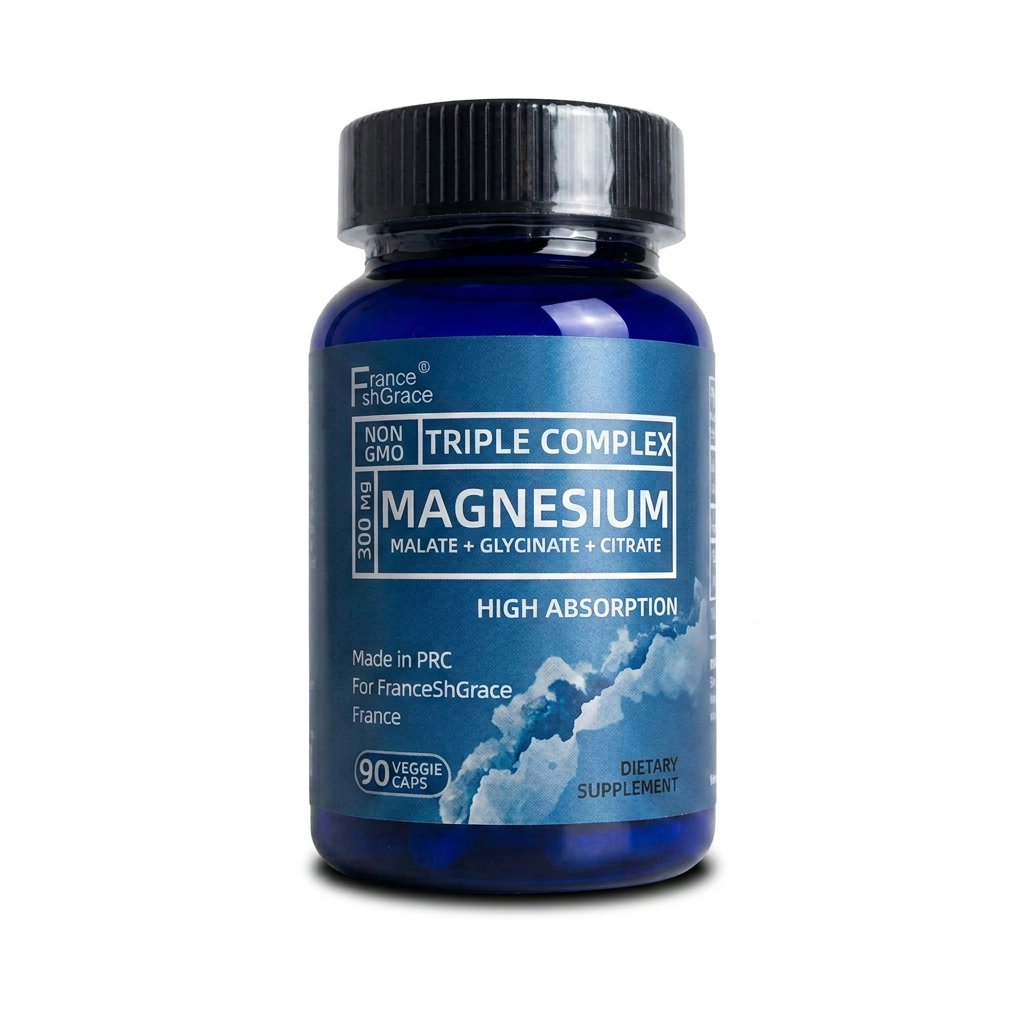
Magnesium is involved in more than 300 enzymatic reactions in the human body. It plays a central role in muscle relaxation, nervous system regulation, and the production of energy at the cellular level.
Not all magnesium is created equal. Magnesium glycinate, bound to the amino acid glycine, is gentle on the stomach and supports calm and sleep. Magnesium citrate is highly absorbable and supports digestive balance. Magnesium malate is associated with daytime energy and muscle recovery.
Combining all three — as we do in our Triple Magnesium Complex — covers the spectrum of needs without forcing you to choose between energy, calm, and digestion.
If you struggle with falling asleep, waking in the night, or persistent muscle tension, a daily magnesium supplement is one of the simplest, most evidence-backed habits you can adopt.
Key Takeaways
- Magnesium powers 300+ enzymatic reactions.
- Glycinate calms, citrate aids digestion, malate energises.
- A combined complex covers the full spectrum.
- Supports sleep onset, sleep quality, and muscle relaxation.
These statements have not been evaluated by health authorities. This article is for educational purposes only and is not intended to diagnose, treat, cure, or prevent any disease.